Interior Design Receiving Warehouses: Benefits, Services & What to Look for
For interior designers, the final reveal to a client is the culmination of weeks, or even months, of hard, focused work. But … Continued

For interior designers, the final reveal to a client is the culmination of weeks, or even months, of hard, focused work. But getting every piece of furniture, artwork, fixture and accessory from multiple vendors to the right place at the right time can create significant logistical challenges.
That’s where interior design receiving and delivery services can make a difference.
A receiving warehouse provides a secure place for furniture and other design assets to be stored before they are ready for delivery and installation. By outsourcing these logistics to a trusted partner, interior designers can spend less time coordinating shipments and managing inventory and more time focused on exceeding client expectations.
Key Takeaways
- A receiving warehouse simplifies logistics for designers by providing a central location for receiving and storing items from multiple vendors.
- Professional receiving teams can identify delivery damages early, giving designers time to resolve issues before installation day.
- Flexible warehousing supports changing project timelines, including phased deliveries, delayed installations and last-minute schedule changes.
- Inventory management provides greater visibility into what has arrived, what is in storage and what is ready for delivery.
- Specialized services, such as white glove delivery and installation, help protect high-value, fragile and oversized design pieces.
- The right warehouse partner becomes an extension of the design team, helping create a smoother experience for both the designer and the client.
Why should interior designers hire receiving and delivery experts?
Beyond the actual design of a space, client management is critical for interior designers. Getting bogged down with ancillary services and logistics can take away from that, especially when it requires a secure facility, moving equipment and a professional crew.
Instead of having shipments arrive at a job site before the space is ready, items can be sent to an interior design receiving warehouse where they are accepted, processed and securely stored until they are needed. This creates a central point of control for the project.
A receiving and delivery partner also will document the condition of the delivery box, crate or pallet to ensure items are arriving damage-free. Identifying issues before installation day can help prevent costly delays and frustrating surprises for the client.
Even with the best preparation, interior design jobs can frequently go off schedule, either speeding up or hitting a delay. A receiving and delivery company can hold or deliver items as needed, easily adapting to the project timeline as changes occur.
How does a receiving warehouse support interior design logistics?
Logistics goes far beyond simply finding a place to store furniture. A full-service receiving and delivery operation should provide the expertise, technology and flexibility needed to manage design inventory from the moment it arrives until it reaches the client.
1. Receiving and Processing
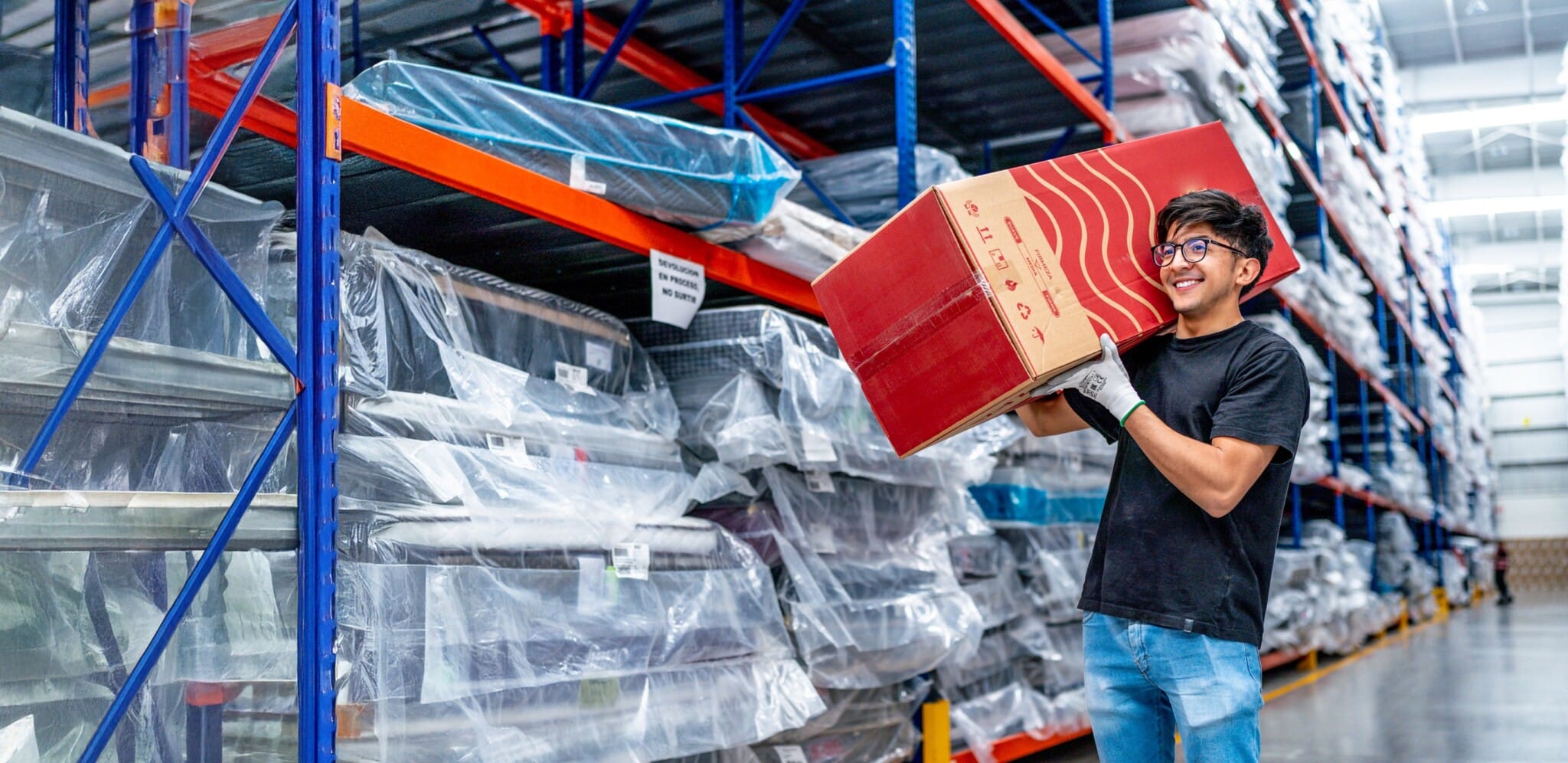
When items arrive at a receiving warehouse, the team will verify the shipment before it is placed into storage. Even when an item leaves a manufacturer in perfect condition, damage can occur during transportation.
The right partner will note the condition of the box, crate or pallet upon arrival and identify any noticeable concerns. Upon request, a receiving team may be able to provide additional inspection services, such as detailed condition reports with photos and checking items against the expected shipment and project specifications.
2. Secure, Specialized Storage
Interior design projects can include high-value furniture, artwork, antiques, lighting, glass, marble and other specialty pieces that require more care than standard warehouse inventory.
A quality receiving warehouse should offer secure storage designed to protect these items until they are ready for delivery. Depending on the items and project requirements, that may include climate-controlled space, 24/7/365 security monitoring and large capacity to store items separately.
3. Inventory Management and Visibility
When items are coming from multiple vendors, keeping track of what has arrived and what is still outstanding can become complicated quickly. Inventory management technology gives designers greater visibility into their stored items, helping them determine what has arrived, where it is located and when it is ready to be delivered.
This becomes particularly valuable for projects with phased installations. A designer may need living room furniture delivered one week, dining room pieces the next and bedroom furnishings after that. With an organized inventory system, items can be identified and scheduled according to the project timeline.

4. Specialized Handling
Many high-value or fragile design pieces arrive crated or specially packaged by the manufacturer or a third party. The receiving partner still plays an important role in safely handling, storing and preparing those items for final delivery.
Depending on the project, that may include careful movement of oversized or fragile pieces, coordination of uncrating, protective handling and white glove delivery to the final space. Artwork, mirrors, marble and glass tabletops, sculptures and specialty lighting often require this added level of care.
5. White Glove Delivery
Receiving and storage are only part of the process. Once the project is ready, items need to make it from the warehouse to the client’s home, office, hotel or other project site safely and professionally. White glove delivery can include careful handling, placement and other services designed specifically for high-value or fragile furnishings.
What should interior designers look for in a receiving warehouse?
Not every warehouse is equipped to handle the unique demands of interior design projects. When evaluating a receiving warehouse partner, designers should consider more than available square footage. Here are additional qualities that are key to finding the right partner:
- Experience with furniture and design-related inventory
- Secure and appropriately conditioned storage
- Detailed receiving and condition reporting
- Inventory management technology and visibility
- Flexible short- and long-term storage
- Professional, trained handling crews
- Reliable delivery capabilities
- The ability to accommodate phased or changing project schedules
- A commitment to professionalism and customer service
Perhaps most importantly, the receiving warehouse partner should operate as an extension of your team. Trust cannot be overstated. Your clients expect you to deliver an exceptional experience, and your partners handling their furnishings should uphold those same standards.
On-site delivery crews should be in uniform and act professionally when entering the client’s space. For interior designers, that final interaction is an important part of the overall client experience.
Hilldrup meets your interior design receiving warehouse and delivery needs
Managing the logistics behind a design project shouldn’t have to fall on the designer. With decades of experience, Hilldrup provides receiving, warehousing and delivery solutions designed specifically for interior designers and furniture procurement professionals.
From the moment an item arrives at a Hilldrup facility, our team can receive and process items, securely store them until needed, and offer inventory tracking through Hilldrup’s Warehouse Management System for greater visibility throughout the project.

Hilldrup’s interior design receiving and delivery services are designed to support everything from individual pieces to full-home installations and phased commercial projects. With more than 1.5 million square feet of Hilldrup-owned warehouse space across the southeast, including 262,000 square feet of climate-controlled storage, Hilldrup can provide the space and flexibility needed to support a range of design projects.
The partnership can extend beyond the warehouse, too. Hilldrup offers white glove delivery with professionally trained, uniformed crews that handle high-value furnishings with care and can coordinate deliveries around project schedules.
For interior designers, that means one trusted partner can help manage the logistics between the vendor and the final installation, allowing you to stay focused on your clients, your vision and the finished space.
Ready to simplify the logistics behind your next design project? Learn more about Hilldrup’s interior design receiving and delivery services, and contact a project specialist today!